
Court strikes down congressional map, ordering new lines before November
A three-judge panel ruled the current map violates voting rights protections and gave the legislature six weeks to redraw.

A federal panel ruled that the state's current congressional map dilutes the voting power of minority communities and ordered new boundaries before the November election.
Redrawing lines this close to an election creates immediate political consequences and can reshape control of one or two House seats.
What we know so far
- The ruling came from a three-judge panel.
- The legislature has six weeks to submit a remedial map.
- If lawmakers miss the deadline, the court will appoint a special master.
- The state attorney general is reviewing options for an emergency appeal.
In a 78-page opinion, the panel found that the current district lines packed minority voters into a single district while splitting others across boundaries that diluted their influence.
What the court ordered
The legislature must submit a new map within six weeks. If it fails to do so, the court will appoint a neutral special master to draw lines.
Political stakes
Analysts estimate that a remedial map could shift one safe seat into competitive territory. Both parties are already preparing for that contingency.
What happens to the primary
Election officials in affected counties say they can adjust ballots if new lines are finalized within the court's window. A delay beyond that would force harder choices.
Why this is moving fast
Breaking-news cycles tend to compress reporting, verification, and reaction into a few hours. Early figures and identifications are sometimes revised within the first day as official sources confirm details. We are publishing what is confirmed now, will mark unconfirmed information clearly, and will revise the article as the picture sharpens. If you are reading this within hours of publication, expect updates.
What this means for everyday readers
National stories like this one tend to feel abstract until they intersect with a household decision — a ballot, a benefit, a benefits letter, a school calendar, a court date, or a town hall. Wherever possible we try to translate the federal-level news into the kinds of practical questions readers are actually trying to answer: what changes, when it changes, who it changes for, and what you can do about it. If you are unsure how a development applies to your situation, official agency hotlines and nonprofit legal aid organizations are usually the fastest path to a real answer.
The political backdrop
Few national stories arrive in a vacuum. The current debate carries the residue of years of prior fights — legislative compromises that frayed, court decisions that narrowed earlier rulings, agency rule-makings that quietly redefined a term, and election cycles that reshuffled who holds the pen on the next round. We try to flag those upstream decisions when they are doing real work in the current story, rather than treating each headline as a fresh start. Readers who want the longer arc can find our prior coverage linked from the related-stories module below.
How we're reporting this story
The Fresh Pulse follows developing news using publicly available reporting, official statements, court filings, agency press releases, and primary-source documents whenever they are available. We aim to publish a fast, plain-English summary of what is confirmed, what is contested, and what is still unknown — and then update the page as new information comes in. Where details remain unclear, we say so plainly rather than fill the gap with speculation. Our priority is to give readers a stable, accurate baseline they can return to throughout the day, even as cable coverage cycles through new angles every few minutes.
What we still don't know
Several pieces of the story remain open. Reporting from competing outlets sometimes diverges on numbers, timing, or motive in the first 24 to 48 hours of a developing event, and early figures are often revised once primary sources release official tallies. Until those confirmations land, we treat single-source claims as provisional. Readers should expect specific numbers in this article to shift as agencies, courts, companies, or independent investigators publish their own findings. We will mark significant changes in the update log at the top of the page rather than silently rewriting earlier text.
Why context matters here
It is easy for a single headline to land without the framing readers need to make sense of it. A new policy, a market move, a court ruling, or a scientific result almost always sits inside a longer arc — previous decisions, prior precedents, related programs, or earlier studies that shape what the latest news actually means. We try to surface that background in plain language so the story does not arrive as an isolated shock. Where a topic has a long history, we link to our explainers and prior coverage so the reader can go as deep as they want without losing the thread of the main update.
How to follow this story
If you want to stay current as new details emerge, the most reliable approach is to follow primary sources directly: the relevant agency newsroom, the official court docket, the company's investor relations page, or the verified accounts of the people closest to the story. Social media will move faster, but it will also be wrong more often. The Fresh Pulse will continue updating this page as confirmed information arrives, and our daily briefing will summarize any meaningful overnight developments so you do not have to refresh feeds to keep up.
A note on corrections
If you spot an error in this article — a date that does not match a primary source, a misattributed quote, a number that has since been revised, or a name we have misspelled — please write to corrections@thefreshpulse.com and we will review it promptly. Material corrections are noted at the bottom of the article along with the date and time of the change. Our goal is to be transparent about what we got wrong, not to quietly edit the record.
The questions we're tracking
As this story moves, a handful of questions tend to drive the reporting forward: what changed, who decided, when does it take effect, who is affected first, what does enforcement or implementation actually look like in practice, and what recourse — legal, political, financial, or procedural — is available to people who disagree with the outcome. We use that checklist as a working outline for updates. When a new piece of reporting answers one of those questions definitively, we promote it into the main summary at the top of the page. When competing accounts disagree, we keep the disagreement visible rather than picking one and moving on.
What comes next
Expect an emergency appeal within days. Election officials are quietly preparing contingency timelines for primary ballots in affected districts.
This story is developing. Last updated June 14, 2026, 3:05 AM PDT.
DailyPulse
Get the day's biggest updates in plain English.
More to read
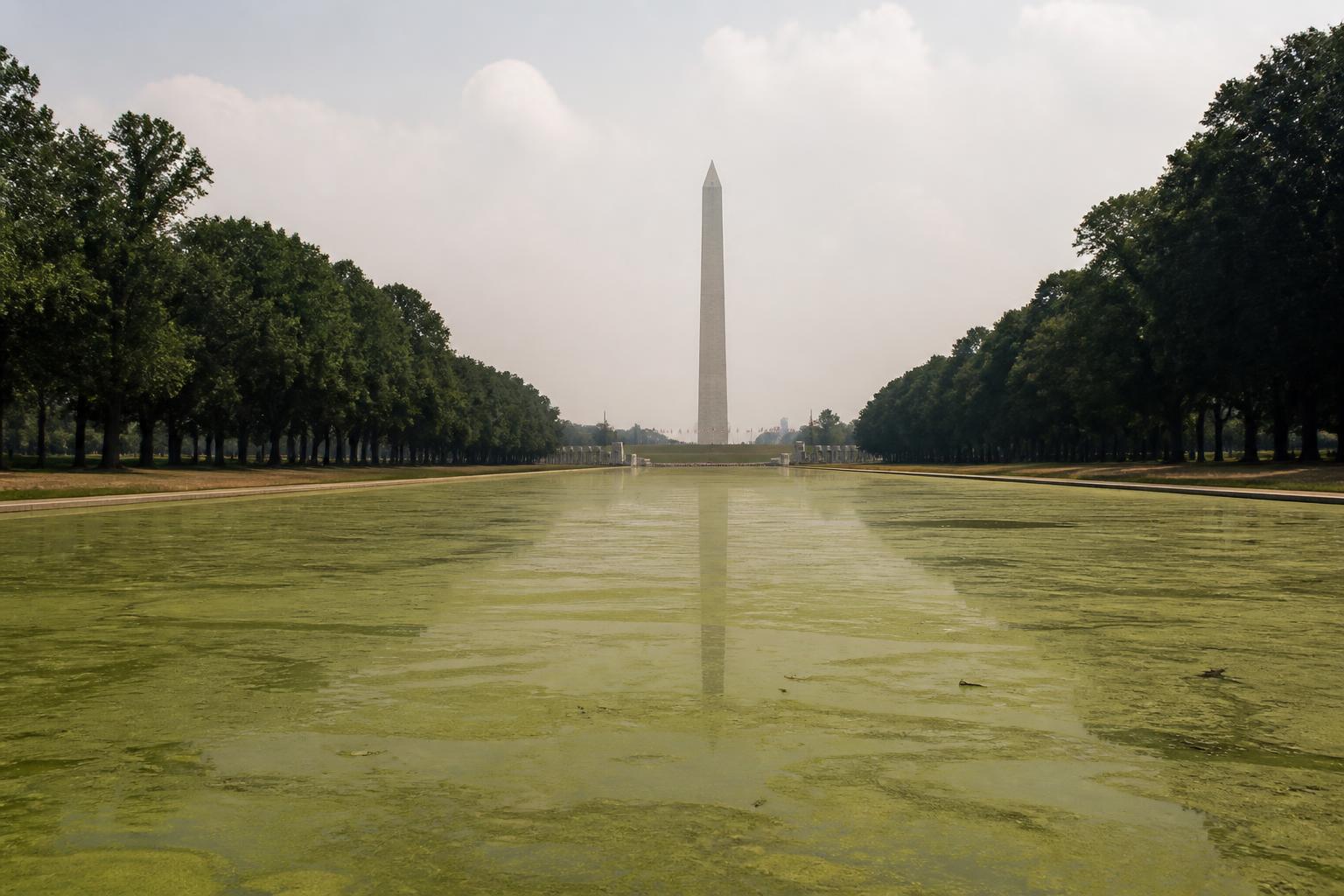
Trump's $14 Million Lincoln Memorial Pool Renovation Is Turning Green With Algae
The iconic reflecting pool was repainted "American flag blue" in a federally funded beautification push. Now it's covered in an algae bloom — and a $1.7M water-cleaning contract awarded to a Trump donor isn't solving it.

Are we heading towards World War 3?
The question is everywhere right now. Here's what experts actually mean when they talk about global conflict risk — and what the average person should know.

Mid-stage trial of long COVID treatment shows promise on fatigue scores
Researchers caution the study is small, but improvements were statistically significant across two key measures.
Comments
Sign in to join the conversation.
Sign in or create an account