
U.S.-Iran Talks Begin in Switzerland as Strait of Hormuz Tensions Threaten Fragile Peace Effort
U.S. and Iranian officials opened talks in Switzerland as tensions over the Strait of Hormuz, Lebanon, and Iran’s nuclear program put a fragile peace effort under pressure.
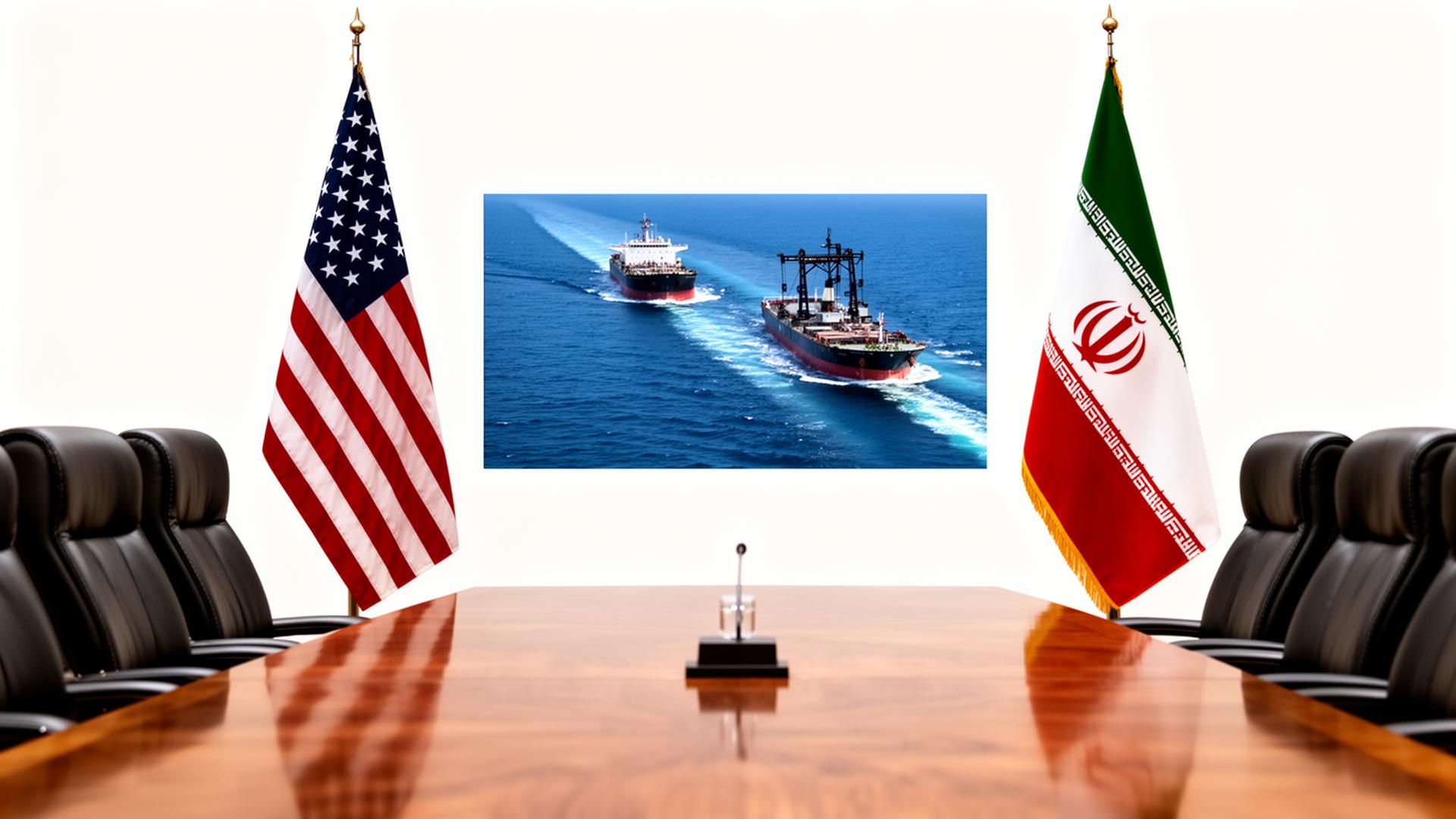
U.S. and Iranian officials began direct negotiations in Switzerland after weeks of military and diplomatic tension.
The talks matter because they sit at the center of three major risks: war, energy disruption, and nuclear escalation.
What we know so far
- U.S. and Iranian officials began talks in Switzerland.
- Vice President JD Vance led the U.S. delegation.
- The talks are connected to a broader effort to reduce hostilities and negotiate a longer-term agreement.
- The Strait of Hormuz is one of the main pressure points.
- Iran has linked parts of the process to regional conflict, including Lebanon.
- Trump has warned Iran against escalating or disrupting shipping.
- The U.S. has disputed some Iranian claims about control or closure of the strait.
- The talks are expected to involve difficult issues including nuclear limits, sanctions, and regional security.
U.S. and Iranian officials opened high-stakes talks in Switzerland this weekend as tensions over the Strait of Hormuz, Lebanon, and Iran’s nuclear program threatened to derail a fragile peace push.
Vice President JD Vance led the U.S. side in Switzerland, where negotiators are trying to turn a preliminary agreement into a more durable framework. But the talks began under pressure after Iran signaled renewed action around the Strait of Hormuz and President Donald Trump issued fresh warnings against Tehran.
The result is a fast-moving diplomatic standoff with consequences far beyond the negotiating room. The talks could affect oil prices, Middle East security, global shipping, and the future of Iran’s nuclear program.
What happened
U.S. and Iranian officials began direct negotiations in Switzerland after weeks of military and diplomatic tension.
The talks are connected to a broader effort to reduce hostilities and create a path toward a longer-term agreement. The discussions are expected to focus on several difficult issues, including Iran’s nuclear activity, sanctions relief, regional fighting, and the security of shipping lanes.
The most immediate flashpoint is the Strait of Hormuz, one of the world’s most important oil-shipping routes. Iran has threatened or claimed action affecting the strait, while U.S. officials have disputed the scope of the disruption and warned Tehran against interfering with commercial traffic.
At the same time, fighting linked to Israel and Hezbollah in Lebanon has added another layer of uncertainty. Iran has tied parts of the diplomatic process to broader regional conditions, while the U.S. has warned Iran against supporting proxy groups that could escalate the conflict.
That makes the Switzerland talks about more than one agreement. They are now a test of whether diplomacy can hold while multiple pressure points are moving at once.
Why it matters
The talks matter because they sit at the center of three major risks: war, energy disruption, and nuclear escalation.
First, there is the military risk. If talks collapse and both sides return to threats or strikes, the region could face a wider conflict. That would affect U.S. forces, Israel, Iran, Gulf states, and allied groups across the Middle East.
Second, there is the oil and shipping risk. The Strait of Hormuz is a narrow waterway connecting the Persian Gulf to global markets. Any serious disruption there can quickly affect oil prices, shipping insurance, energy markets, and consumer costs around the world.
Third, there is the nuclear risk. The U.S. wants limits on Iran’s nuclear program. Iran wants sanctions relief and recognition of what it says are its rights under international agreements. Finding a compromise has been difficult for years, and the current moment adds new urgency.
For regular readers, this story matters because it can show up in everyday life through gas prices, market volatility, international security concerns, and political debate in Washington.
What we know so far
The key details include direct negotiations in Switzerland, JD Vance leading the U.S. delegation, a broader effort to reduce hostilities, the Strait of Hormuz as a flashpoint, Iran’s linkage of the talks to regional conflict including Lebanon, Trump’s warnings against escalation, U.S. disputes over Iranian claims about the strait, and the expectation that nuclear limits, sanctions, and regional security will all be on the table.
The biggest uncertainty is whether the two sides are using pressure as part of negotiation — or whether the pressure will overwhelm the talks entirely.
Why the Strait of Hormuz is central
The Strait of Hormuz is a narrow passage between the Persian Gulf and the Gulf of Oman. It is one of the most important energy chokepoints in the world.
When tensions rise there, markets pay attention.
Even the threat of disruption can create uncertainty because tankers, insurers, traders, and governments all have to calculate the risk of shipping through the area. If the strait were seriously blocked or made unsafe, oil prices could rise and energy markets could become more volatile.
That is why the Strait of Hormuz is not just a regional issue. It is a global economic issue.
For Iran, the strait is a pressure point. For the U.S., keeping it open is a strategic priority. For the rest of the world, it is a reminder that energy security can be affected by a single narrow waterway.
The Trump-Vance contrast
One reason this story is getting attention is the contrast between the diplomatic track and the public pressure campaign.
Vance’s role in Switzerland is to keep negotiations moving. That requires careful language, private discussions, and enough flexibility to test whether a deal is possible.
Trump’s public warnings send a different message: the U.S. is willing to escalate if Iran pushes too far.
That combination may be intentional. Governments often use diplomacy and pressure at the same time. But it also creates risk. Harsh public threats can make it harder for negotiators to stay at the table, especially when the other side is under domestic pressure not to appear weak.
The question now is whether the pressure strengthens the U.S. negotiating position or makes a deal harder to reach.
What could happen next
There are several possible paths from here.
The first is that talks continue and both sides agree on a more detailed framework. That would likely include steps on sanctions, nuclear inspections, shipping security, and regional de-escalation.
The second is that the talks stall but do not collapse. In that case, both sides may keep meeting while using public statements to blame the other side for delays.
The third is that talks break down. That could bring renewed military threats, more shipping tensions, and greater uncertainty in oil markets.
The fourth is a temporary compromise. Both sides could agree to limited steps, such as keeping shipping lanes open, reducing proxy activity, or allowing technical nuclear discussions to continue, while postponing the hardest questions.
For now, the story remains fluid.
Bottom line
The U.S.-Iran talks in Switzerland are a major diplomatic test.
The two sides are trying to move from crisis management toward a broader agreement, but the process is fragile. The Strait of Hormuz, Lebanon, Iran’s nuclear program, sanctions, and Trump’s warnings are all pulling the talks in different directions.
If diplomacy holds, it could reduce pressure across the region and calm energy markets.
If it fails, the next phase could be far more dangerous.
For now, the world is watching Switzerland — and the Strait of Hormuz.
What comes next
The most likely paths are continued negotiation, a stall with public blame, a breakdown with renewed military and shipping tensions, or a limited temporary compromise on shipping and proxy activity while the hardest questions are postponed. For now, the story remains fluid.
This story is developing. Last updated June 21, 2026, 7:00 AM PDT.
DailyPulse
Get the day's biggest updates in plain English.
More to read
Trump's $14 Million Lincoln Memorial Pool Renovation Is Turning Green With Algae
The iconic reflecting pool was repainted "American flag blue" in a federally funded beautification push. Now it's covered in an algae bloom — and a $1.7M water-cleaning contract awarded to a Trump donor isn't solving it.

Are we heading towards World War 3?
The question is everywhere right now. Here's what experts actually mean when they talk about global conflict risk — and what the average person should know.
Comments
Sign in to join the conversation.
Sign in or create an account