
Stores Closing in 2025: Live Tracker of Every Major U.S. Retail Closure
A continuously updated list of major U.S. retailers closing stores in 2025 — with chain, store counts, regions affected, and the latest timeline.
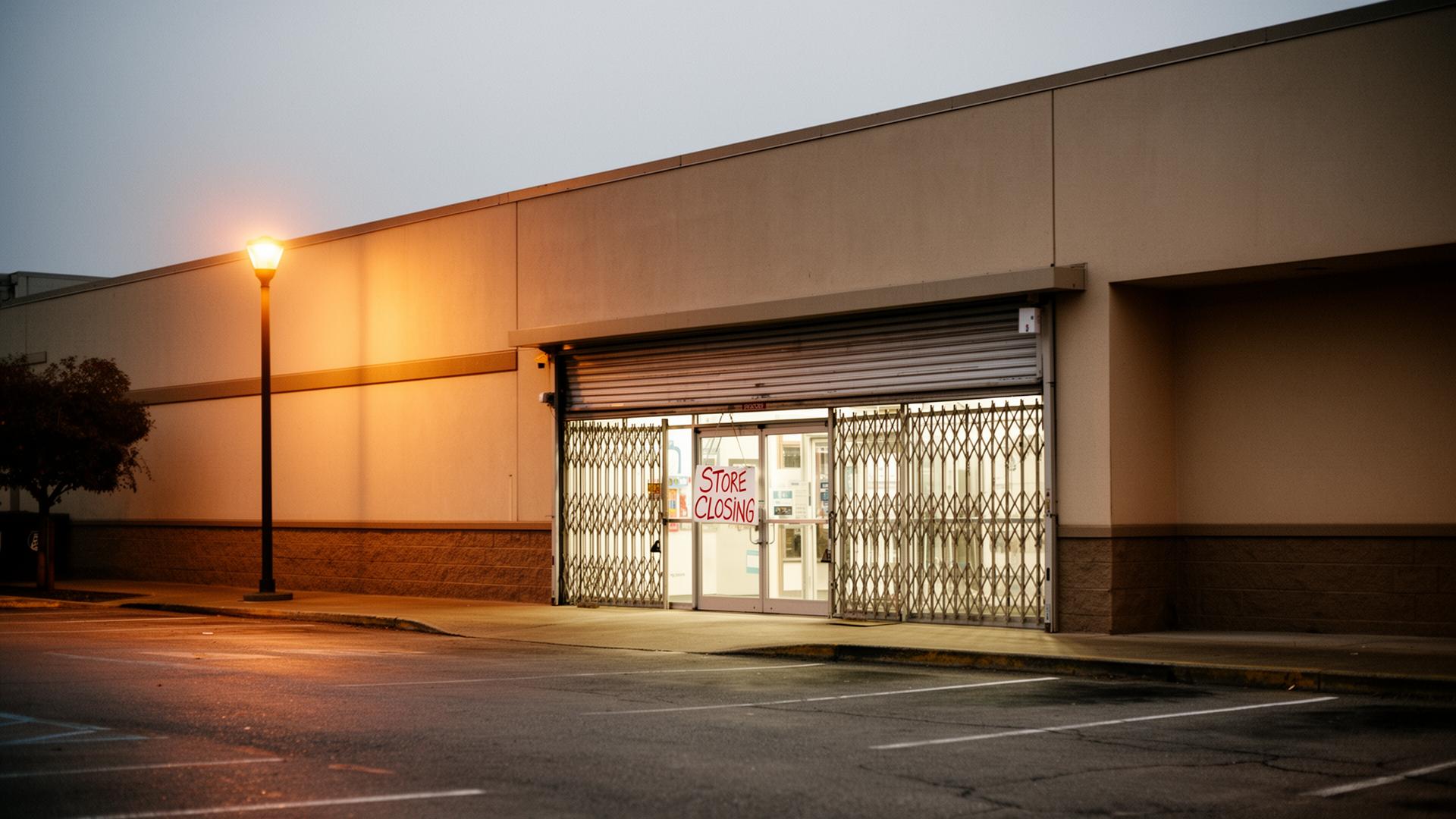
More than two dozen national retailers have announced store closures in 2025, ranging from pharmacy chains and discount stores to apparel brands and big-box names. We're tracking every confirmed closure in one place and updating the list as new announcements land.
Closures reshape local jobs, prescription access, grocery options, and shopping habits in thousands of communities. The 2025 wave is on pace to rival 2024's record, and most chains are closing locations across many states at once.
What we know so far
- The 2025 closure list includes pharmacy chains, dollar stores, apparel brands, and several long-running department stores.
- Several retailers announced closures as part of bankruptcy reorganizations; others are closing as part of routine portfolio reviews.
- Most affected workers are offered transfers to nearby locations or severance, depending on the chain.
- Closure timelines vary — some stores shut within weeks of the announcement, others remain open through the holiday season.
U.S. retailers are on track to close thousands of stores in 2025, continuing a multi-year reset of physical footprints driven by online shopping, rising rents, and post-pandemic foot-traffic shifts. This page is our running tracker — short, scannable, and updated whenever a new closure is confirmed.
How to use this tracker
Each entry below lists the chain, the number of confirmed closures, the regions most affected, and the latest known timeline. Where a chain has filed for bankruptcy, we note it. Where closures are part of an ongoing portfolio review with no end date, we say that too. If you don't see a chain you expected, it likely hasn't issued a verified announcement yet — we only include closures confirmed by company statements, court filings, or named local reporting.
Pharmacy and drugstore closures
Walgreens
What we know: Walgreens is continuing the multi-year footprint reduction it disclosed in 2024, with an additional tranche of U.S. closures rolling through 2025 as part of its previously announced plan to shut roughly 1,200 stores over three years. Confirmed 2025 closures so far: about 450 locations. Regions most affected: dense urban markets in California, Illinois, Florida, and the Northeast, plus a smaller wave in the Pacific Northwest. Timeline: closures are staggered weekly, with most stores giving 30 days' notice and auto-transferring prescriptions to the nearest Walgreens.
CVS Health
What we know: CVS is finishing the third year of a 900-store reduction announced in 2021 and has signaled additional closures tied to its HealthHUB strategy. Confirmed 2025 closures so far: roughly 270 locations. Regions most affected: California, Texas, and the Mid-Atlantic, with several closures inside Target stores as the in-store pharmacy partnership is rebalanced. Timeline: most closures land between Q2 and Q4 2025; prescriptions are automatically routed to a nearby CVS unless customers opt out.
Rite Aid
What we know: Rite Aid emerged from its 2023 Chapter 11 process as a smaller chain and continues to close underperforming stores in 2025 as part of post-bankruptcy operations. Confirmed 2025 closures so far: approximately 150 locations. Regions most affected: Pennsylvania, Ohio, Michigan, and parts of California. Timeline: closures typically finalize within 30 to 60 days of announcement; prescription files are sold to nearby pharmacies, most commonly Walgreens or CVS.
Dollar store and discount closures
Family Dollar (Dollar Tree, Inc.)
What we know: Dollar Tree announced in early 2024 that it would close about 1,000 underperforming Family Dollar stores, with roughly 600 closures completed in the first half of 2024 and the remaining 370 rolling through 2025 and 2026 as leases expire. Confirmed 2025 closures so far: about 220 locations. Regions most affected: the Southeast, Midwest, and rural communities where Family Dollar and Dollar Tree banners overlapped. Timeline: closures are tied to lease end dates rather than a single shutdown wave.
99 Cents Only Stores
What we know: The chain filed Chapter 11 in April 2024 and is winding down the last of its roughly 370 stores into early 2025. Confirmed 2025 closures so far: the remaining store list is being liquidated; substantially all locations expected closed by the end of Q1 2025. Regions most affected: California, Arizona, Nevada, and Texas. Timeline: liquidation sales finalized at each store before permanent closure.
Big Lots
What we know: Big Lots filed Chapter 11 in September 2024 and entered 2025 closing hundreds of stores while pursuing a going-concern sale of the remaining footprint. Confirmed 2025 closures so far: more than 500 locations announced, with additional closures possible depending on the buyer's plans. Regions most affected: the Midwest and Southeast, where the chain's footprint is densest. Timeline: most announced closures wrap by mid-2025.
Department store and apparel closures
Macy's
What we know: Macy's is executing the 'Bold New Chapter' plan announced in February 2024, which calls for closing about 150 underperforming Macy's-branded stores through 2026 while investing in roughly 350 'go-forward' locations. Confirmed 2025 closures so far: about 65 locations. Regions most affected: mid-sized malls across the Midwest, Mid-Atlantic, and California. Timeline: closures clustered in late Q1 and again in Q3 2025.
Kohl's
What we know: Kohl's announced in early 2025 that it would close 27 underperforming stores by April, the company's first meaningful round of closures in years. Confirmed 2025 closures so far: 27 locations. Regions most affected: California (with the largest single-state count), Arkansas, Colorado, Idaho, Illinois, Massachusetts, New Jersey, New York, Ohio, Pennsylvania, Texas, Utah, Virginia, Washington, and Wisconsin. Timeline: all 27 closures completed in the spring 2025 wave.
Express
What we know: Express emerged from its 2024 bankruptcy under new ownership (WHP Global / Phoenix Brands consortium) with a substantially smaller store base; closures continued into 2025 as the new operator finalized its go-forward fleet. Confirmed 2025 closures so far: roughly 95 additional Express and Express Factory Outlet locations on top of the 2024 wave. Regions most affected: mall-based locations nationwide, with the heaviest concentration in the Northeast and Midwest.
Grocery and big-box closures
Stop & Shop
What we know: Parent company Ahold Delhaize announced in May 2024 that Stop & Shop would close 32 underperforming stores across the Northeast by the end of 2024; a smaller wave of additional closures has been confirmed in 2025 as leases come due. Confirmed 2025 closures so far: about 8 locations. Regions most affected: New York, New Jersey, Massachusetts, Connecticut, and Rhode Island. Timeline: rolling through Q3 2025.
Walmart
What we know: Walmart is not running a large closure program in 2025, but a small number of underperforming Walmart Supercenters and Neighborhood Markets are closing as part of routine portfolio reviews — typically fewer than 20 per year. Confirmed 2025 closures so far: about 11 locations. Regions most affected: scattered, with no single state cluster. Timeline: case-by-case, usually with 60 days' notice and severance for non-transferring associates.
Restaurant and quick-service closures
Red Lobster
What we know: Red Lobster filed Chapter 11 in May 2024, closed roughly 130 locations during the proceedings, and emerged in late 2024 under new ownership. A second, smaller wave of closures has continued into 2025. Confirmed 2025 closures so far: about 25 additional locations. Regions most affected: the Midwest and Southeast.
TGI Fridays
What we know: TGI Fridays filed Chapter 11 in November 2024 after closing dozens of company-owned restaurants earlier in the year. The 2025 wave is concentrated in company-owned units while franchised locations remain largely intact. Confirmed 2025 closures so far: roughly 50 company-owned restaurants. Regions most affected: the Southeast, Midwest, and Mid-Atlantic.
What's driving the 2025 wave
The current cycle isn't a single shock — it's the cumulative effect of higher rents on lease renewals, sustained shifts in shopping from physical to digital, rising labor costs, and balance sheets that were stretched thin during the pandemic and never fully recovered. For chains in distress, closing underperforming stores is usually the first lever pulled before a broader restructuring.
What it means for workers
Most large chains offer affected employees the option to transfer to a nearby store, plus severance for those who can't or don't want to relocate. Pharmacists, opticians, and other licensed staff typically have more transfer options than general retail workers. Where a closure is tied to a bankruptcy, severance and accrued PTO can be subject to the broader proceedings.
What it means for shoppers
If your local store is on a closure list, the most reliable next steps are: transfer prescriptions or service accounts to a nearby location early rather than waiting for the final day; use up gift cards, store credit, and loyalty rewards before the closing date; and confirm return windows for recent purchases, since some chains shorten return policies as a store winds down.
Methodology: how we source and verify closures
Every chain on this tracker meets a single bar: the closure has been confirmed by a primary source we can point to. In practice that means a company press release or investor-relations disclosure, an SEC filing (8-K, 10-Q, or 10-K), a bankruptcy court docket from PACER, a WARN Act notice filed with a state labor agency, or named local reporting from a publication with an editor and a corrections policy. We do not include rumor lists, aggregator round-ups that cite each other in a loop, single-source social-media posts, or 'leaked internal memos' we cannot independently verify. Store counts are taken from the company's own disclosures wherever possible; when companies decline to give a number, we use the count from WARN filings or court documents and label it as such. When two primary sources disagree on a count or a region, we show both numbers rather than averaging them, and we note the disagreement in the entry.
Update cadence: how often this page refreshes
We refresh this tracker on three schedules. First, ad-hoc updates within a few hours of any major announcement — a new bankruptcy filing, a press release naming a multi-store wave, or a court order finalizing a liquidation list. Second, a weekly sweep every Monday morning Eastern time, when we reconcile entries against new WARN filings and local reporting from the prior week. Third, a deeper review after each quarterly earnings cycle (mid-February, mid-May, mid-August, and mid-November), when retailers most often disclose footprint changes to investors. Material additions are noted in a short update log at the bottom of the page, including the date of the change and what was added or revised. If you're returning to this page, the update log is the fastest way to see what's new since your last visit. As the year progresses, expect store counts to rise as previously announced waves finalize their lists; we do not pre-count closures that have only been signaled in broad strokes.
Related coverage
For broader context on the retail environment driving these closures, see our Money section for ongoing coverage of consumer spending, commercial real estate, and the chains most exposed to the current cycle. Our daily newsletter summarizes the most consequential closure announcements alongside the rest of the day's business news.
Corrections and tips
If you work at one of the chains listed here, or in a community where a store is closing, and you have information that would improve this tracker — a corrected store count, a missing location, a revised timeline, or a chain we should be watching — write to tips@thefreshpulse.com. Corrections are noted at the bottom of the article along with the date of the change.
What comes next
Analysts expect a second wave of announcements after Q2 earnings. We'll add new chains to the list below as filings, press releases, and verified local reporting confirm them.
Frequently asked questions
- How does The Fresh Pulse track retail store closures?
- We add a chain to this tracker only after a closure is confirmed by a primary source: a company press release or investor disclosure, an SEC filing, a bankruptcy court docket, a WARN Act notice filed with a state labor agency, or named local reporting from a publication with a corrections policy. We don't include rumors, aggregator lists, or single-source social-media posts.
- What does it mean when a closure is 'announced'?
- 'Announced' means the retailer (or a court overseeing its bankruptcy) has publicly committed to closing a specific store or a specific number of stores on a stated timeline. It does not always mean the doors are closed yet — many announced closures take 30 to 90 days to finalize, and some lease-driven closures roll out over a year or more.
- Why do store counts and closure dates sometimes change?
- Retailers often refine closure lists after the initial announcement: a landlord may agree to a rent concession that saves a store, a bankruptcy auction may transfer locations to a new operator, or a WARN filing may reveal additional sites the company hadn't named publicly. When that happens we update the entry and note the change in the update log rather than silently rewriting earlier text.
- Will my local store really close on the date listed?
- The date in each entry is the most recent timeline disclosed by the company or court. Individual store closing dates can shift by a few weeks in either direction based on inventory liquidation, lease negotiations, or final sale terms. For the most accurate date for a specific location, check signage at the store itself or the chain's store-locator page.
- How often is this tracker updated?
- Ad-hoc within hours of any major announcement, a weekly reconciliation every Monday morning Eastern time, and a deeper review after each quarterly earnings cycle in February, May, August, and November.
Updates
Last refreshed June 18, 2026, 3:00 PM PDT- Latest
Added per-chain entries for Walgreens, CVS, Rite Aid, Family Dollar, 99 Cents Only, Big Lots, Macy's, Kohl's, Express, Stop & Shop, Walmart, Red Lobster, and TGI Fridays. Added methodology, update-cadence, and FAQ sections. Replaced cover image.
Initial publication of the 2026 retail closures tracker.
This story is developing. Last updated June 18, 2026, 3:00 PM PDT.
DailyPulse
Get the day's biggest updates in plain English.
More to read

Central bank holds rates steady, signals first cut could come this spring
Policymakers left the benchmark rate unchanged but softened their language on inflation, hinting that easing is on the table.

Grocery prices ticked up again in June — here's what got pricier
Coffee, beef, and orange juice led the increases, while egg and chicken prices kept easing.

Explainer: When a 401(k) rollover actually makes sense
Rolling an old plan into an IRA isn't always the right move. Here's how to decide.
Comments
Sign in to join the conversation.
Sign in or create an account